
How to identify it
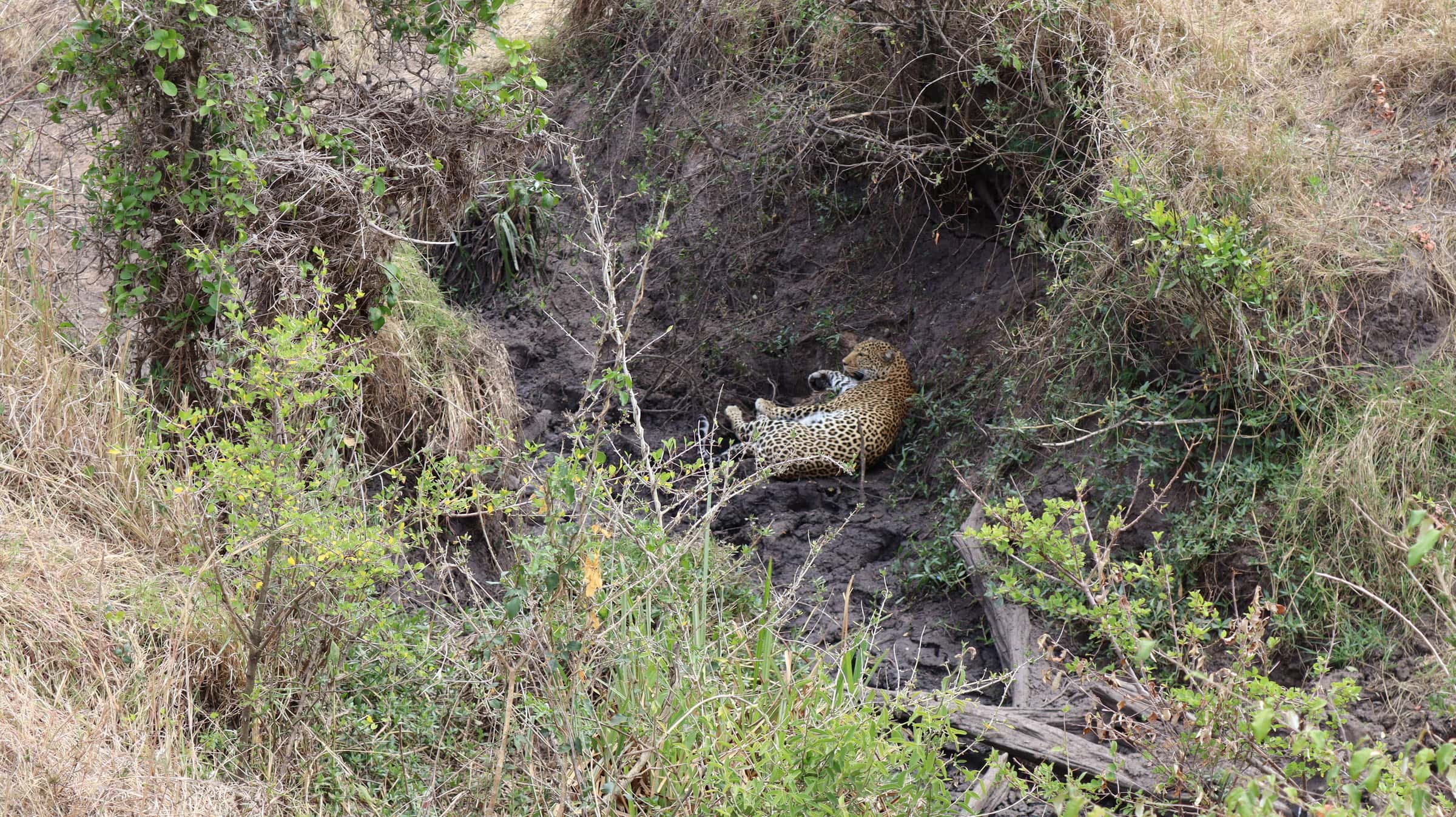
Leopards have rosette-shaped markings rather than the solid round spots of a cheetah. They are powerfully built, with a long tail used for balance. A dark tear line like a cheetah's is absent.
Behaviour and social life
Individuals patrol territories, rest in cover or trees and may cache prey. Their timing is flexible; a leopard can move by day or night depending on disturbance, temperature and opportunity.
Diet
Prey ranges from small mammals and birds to medium-sized antelope. Diet varies by habitat, and a leopard may scavenge when the opportunity arises.
Habitat and East African context
Cover matters. Riverine woodland, rocky kopjes, dense shrubs and trees can all support concealment, which explains why presence does not translate into easy viewing.
Responsible viewing
A good encounter gives the animal control of distance and movement.
- Avoid boxing an animal between vehicles.
- Do not pressure a leopard to descend from a tree or leave cover.
- Keep extra distance around a mother, cub or cached prey.
Photography considerations
Use technique and patience to protect the sighting rather than asking the guide to create an unnatural scene.
- Focus on the eye through intervening vegetation.
- A telephoto lens helps preserve space.
- Use a faster shutter speed if the animal is walking through shade.