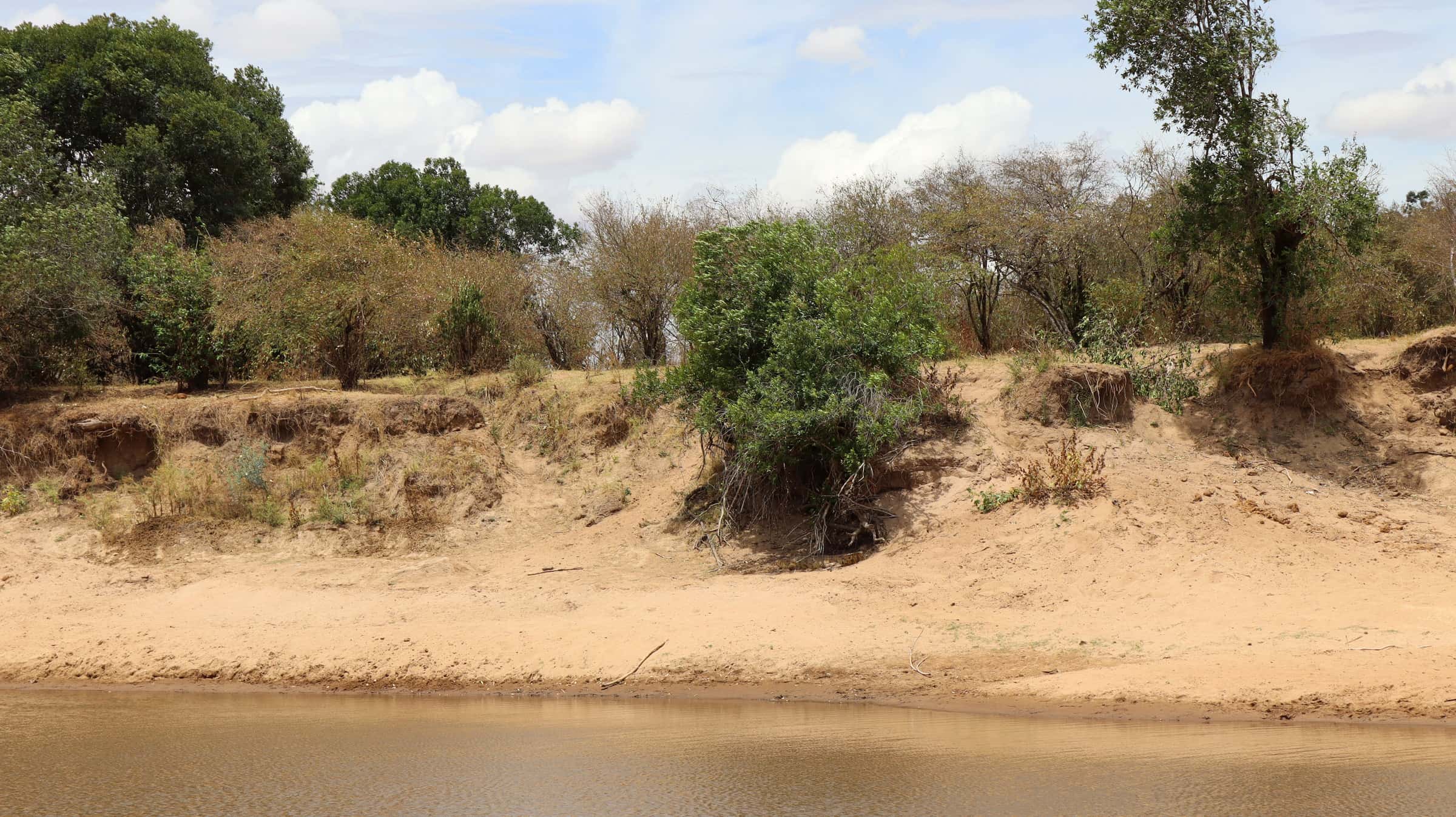
Hippopotamuses resting together in water

Wildlife profile

Hippopotamus

The hippopotamus is a large semi-aquatic mammal that rests in water or mud by day and usually grazes on land after dark. Its apparent stillness should never be mistaken for safety; hippos require substantial distance on shore and water.

At a glance

Scientific name
Hippopotamus amphibius
IUCN status
Vulnerable
Diet
Primarily grazer
Daily pattern
Aquatic resting; mostly nocturnal land feeding

Field principle

  • Vulnerable (IUCN assessment)
  • Presence is not a sighting guarantee
  • Local rules govern vehicle position and distance
  • Global status is not the same as local abundance

How to identify it

A barrel-shaped body, very large head, short legs and high-set eyes, ears and nostrils suit a semi-aquatic life. Calves are much smaller but remain closely protected.

Behaviour and social life

Groups gather in water, where social spacing and territorial behaviour can be complex. At night hippos can travel on land to graze, including through lodge grounds near water.

Diet

Despite enormous canine teeth used in display and conflict, hippos primarily graze rather than hunt.

Habitat and East African context

Rivers, lakes and wetlands with nearby grazing support hippos. Water level and access affect where groups rest.

Responsible viewing

A good encounter gives the animal control of distance and movement.

  • Never stand between a hippo and the water.
  • Follow a property's escort rules after dark.
  • Boat operators must keep a safe route and distance.

Photography considerations

Use technique and patience to protect the sighting rather than asking the guide to create an unnatural scene.

  • Use a telephoto lens from a stable, authorized position.
  • Do not encourage a boat to block surfacing animals.
  • Expose for highlights on wet skin in strong sun.

Where you may encounter this species

kenya

Lake Naivasha

Lake Naivasha is a freshwater Rift Valley lake used as a relaxed stop between Nairobi, Lake Nakuru and the Masai Mara. Boat trips, birding and nearby walking or cycling activities are optional and depend on weather, water conditions and the chosen operator.

Read Lake Naivasha

kenya

Amboseli National Park

Amboseli is a southern Kenya national park known for elephants, wetlands fed by underground water and views toward Mount Kilimanjaro across the border in Tanzania. Clear mountain views depend on cloud and weather, so they should be treated as an opportunity rather than a promise.

Read Amboseli National Park

tanzania

Ngorongoro Conservation Area

The Ngorongoro Conservation Area is a multi-use protected landscape in northern Tanzania, best known to visitors for the Ngorongoro Crater. A crater game drive can offer concentrated wildlife viewing, while access, descent timing and current authority rules shape the day.

Read Ngorongoro Conservation Area

Approved package facts are preserved; wildlife remains an opportunity, never a guarantee.

Compare more routes

Related wildlife

Near Threatened

African buffalo

The African buffalo is a water-dependent, herd-forming bovid found in grassland, woodland and some forest systems. It is powerful and unpredictable at close range, so visitors should remain in authorized vehicles or guided areas.

Read African buffalo

Endangered

African savanna elephant

The African savanna elephant is a wide-ranging, highly social herbivore of open and wooded habitats. Family groups and bulls move across park boundaries and wildlife corridors, so their space and right of way are central to responsible viewing.

Read African savanna elephant

Common traveller questions

Are hippos safe because they eat grass?

No. They are large, territorial around water and dangerous when approached or blocked. Always follow guide and property instructions.

Can I walk beside Lake Naivasha at night?

Do not do so independently. Follow the specific property's rules and escort arrangements because hippos may leave the water after dark.

Sources and fact checking

Facts checked: 2026-11-05

Official and conservation sources support the factual claims below. Time-sensitive fees, rules and conditions must be rechecked before travel.

  1. Lake Naivasha Ramsar Information Sheet — Convention on Wetlands. Supports: freshwater wetland status, habitats, waterbirds and ecological context.
  2. Hippopotamus Red List Assessment — IUCN Red List. Supports: taxonomy, Vulnerable status, semi-aquatic ecology.

See our editorial standards and corrections policy.