
How to identify it
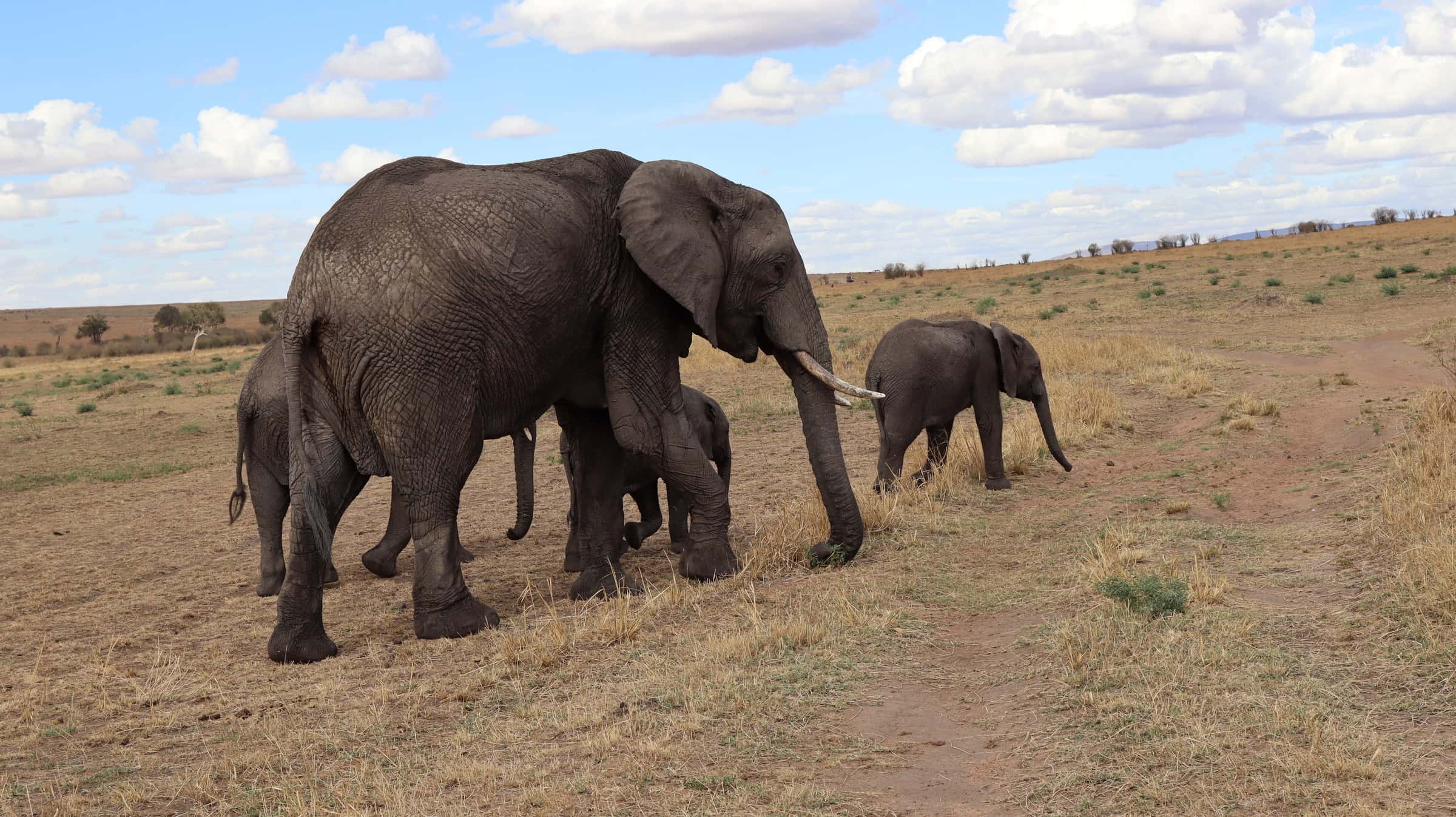
Savanna elephants are the larger of Africa's two elephant species, with very large ears and two finger-like projections at the trunk tip. This profile does not describe the forest elephants that occur in parts of Central and West Africa, including forest contexts distinct from the safari circuit here.
Behaviour and social life
Female-led family groups maintain long-term bonds and communicate through touch, sound and low-frequency calls. Bulls may be solitary or form loose associations. Individuals can react to vehicles, especially around calves or constrained crossings.
Diet
Elephants browse and graze, changing their diet with season and habitat. Their feeding, movement and digging reshape vegetation and water access for other species.
Habitat and East African context
They use savannah, woodland, wetlands and corridors connecting protected areas. Amboseli demonstrates why ecosystem-scale movement matters beyond a park boundary.
Responsible viewing
A good encounter gives the animal control of distance and movement.
- Stop well clear of a crossing route and never split a family group.
- Watch ear, head and movement cues; let the guide create more space early.
- Do not imitate calls or use food to attract an animal.
Photography considerations
Use technique and patience to protect the sighting rather than asking the guide to create an unnatural scene.
- A medium telephoto can show family interaction without crowding.
- Leave room in the frame in the direction of travel.
- Protect equipment from dry-season dust.