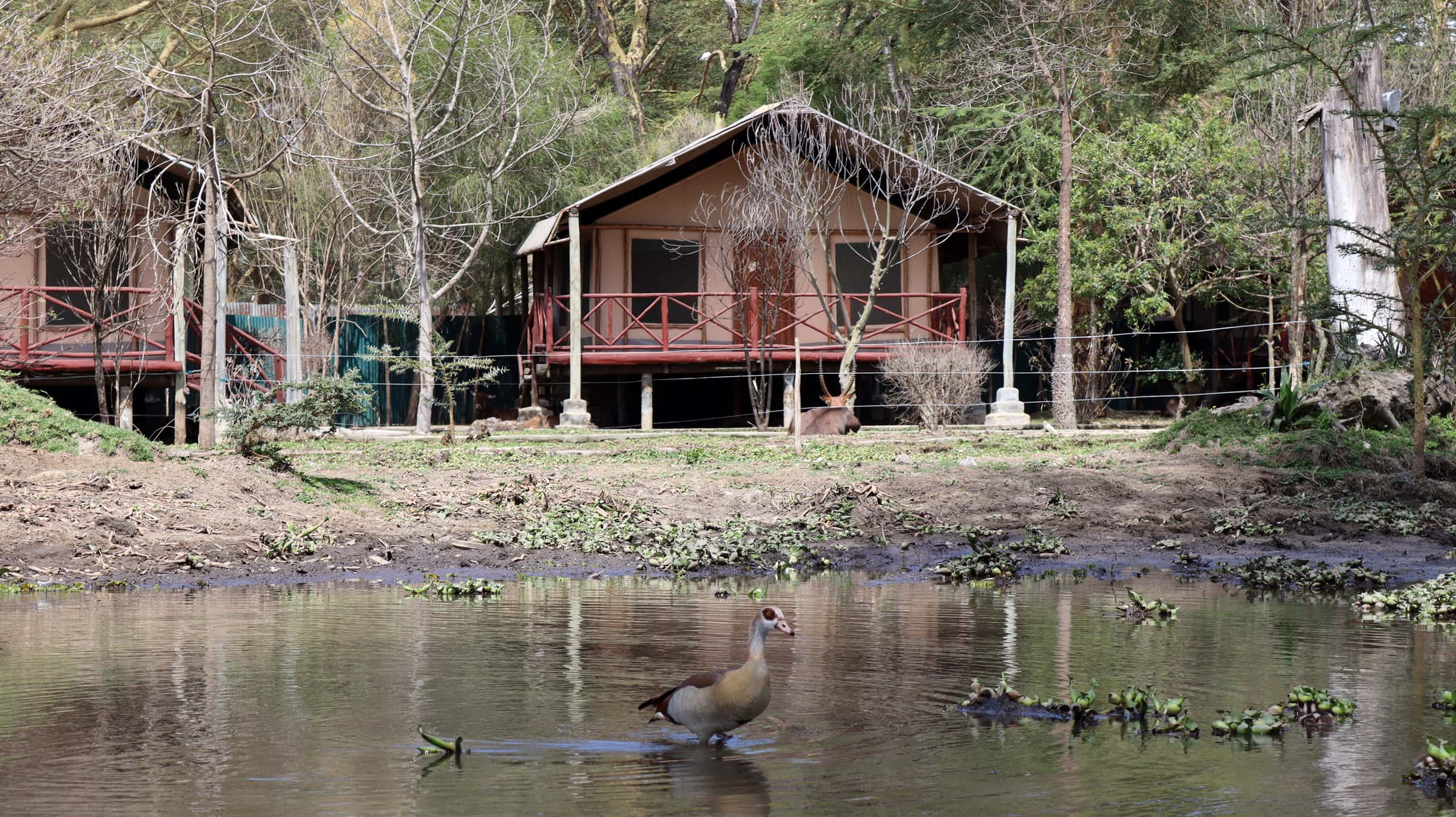
Waterbird in an East African wetland

Kenya destination guide

Lake Nakuru National Park

Lake Nakuru National Park protects a Rift Valley lake and surrounding woodland, grassland and rocky escarpment. It is frequently included for rhino conservation and birdlife; flamingo numbers change with lake conditions and should never be promised.

At a glance

Country
Kenya
Landscape
Lake, grassland, acacia and euphorbia woodland, escarpment
Known for
Rhino habitat and waterbirds
Route fit
Nairobi, Lake Naivasha and Masai Mara circuits

Why it matters

  • Black and white rhino opportunities
  • Changing waterbird assemblages
  • Compact game-drive circuit
  • Rift Valley viewpoints and woodland

Why include Lake Nakuru

The park adds woodland, lake and escarpment habitats to an itinerary dominated by open savannah. Rhino conservation is a core reason travellers include it, although dense vegetation and animal movement still make every sighting uncertain.

Flamingos remain associated with Lake Nakuru, but food supply, water chemistry and water level affect their distribution among Rift Valley lakes. Current conditions matter more than historic postcard images.

Route planning

Lake Nakuru is often paired with Lake Naivasha before or after the Masai Mara. That creates a varied route without treating each stop as interchangeable: Nakuru emphasizes a protected park and game drives, while Naivasha adds lake and optional activity choices.

Accommodation may be inside or outside the park. Confirm the exact property and gate logistics; a tour description that says only lodge or camp does not name a specific hotel.

Practical viewing

A moderate telephoto lens is useful in woodland and around the lake edge. Keep windows and equipment ready for dust or showers, and follow the guide's direction around rhinos and other animals.

Water levels and road conditions can alter accessible areas. The park authority's current notices take priority over a fixed online description.

Wildlife you may encounter

Critically Endangered (IUCN assessment)

Black rhinoceros

The black rhinoceros is a Critically Endangered browsing rhino with a hooked upper lip. East African populations are closely protected; exact locations should not be exposed and a safari should never promise a sighting.

Read Black rhinoceros

Near Threatened

White rhinoceros

The white rhinoceros is a broad-lipped grazing rhino. Kenya's managed populations represent assisted range rather than the species' indigenous historic range, an important distinction when describing conservation and safari opportunities.

Read White rhinoceros

Near Threatened

African buffalo

The African buffalo is a water-dependent, herd-forming bovid found in grassland, woodland and some forest systems. It is powerful and unpredictable at close range, so visitors should remain in authorized vehicles or guided areas.

Read African buffalo

Approved package facts are preserved; wildlife remains an opportunity, never a guarantee.

Compare more routes

Planning guides

Travel guide

Best Time for an East Africa Safari

There is no single best month for all East Africa. Drier periods can concentrate some wildlife and improve road conditions; greener periods can bring birding, dramatic landscapes and lower demand. Migration, rain and gorilla trekking require destination-specific planning, not a fixed continent-wide calendar.

Read Best Time for an East Africa Safari

Travel guide

Family Safari in East Africa

A good family safari uses fewer bases, a realistic number of game-drive hours and accommodation whose room layout and child policies are confirmed. A private vehicle can add flexibility, while primate permits and individual camps may impose minimum ages.

Read Family Safari in East Africa

Travel guide

Safari Accommodation Explained

Choose safari accommodation by exact property, location, room and operating details, not by the word lodge, camp or luxury alone. A permanent tented camp can have full en-suite rooms, while a lodge can be simple; category labels are not universal ratings.

Read Safari Accommodation Explained

More Kenya destinations

Masai Mara National Reserve

The Masai Mara is a savannah reserve in south-west Kenya, connected ecologically to Tanzania's Serengeti. Travellers choose it for year-round game viewing, big-cat habitat and seasonal movement of wildebeest and zebra, but no particular sighting or river crossing can be guaranteed.

Read Masai Mara National Reserve

Amboseli National Park

Amboseli is a southern Kenya national park known for elephants, wetlands fed by underground water and views toward Mount Kilimanjaro across the border in Tanzania. Clear mountain views depend on cloud and weather, so they should be treated as an opportunity rather than a promise.

Read Amboseli National Park

Lake Naivasha

Lake Naivasha is a freshwater Rift Valley lake used as a relaxed stop between Nairobi, Lake Nakuru and the Masai Mara. Boat trips, birding and nearby walking or cycling activities are optional and depend on weather, water conditions and the chosen operator.

Read Lake Naivasha

Common traveller questions

Will I see flamingos at Lake Nakuru?

Flamingos may be present, but their number and location change with ecological conditions. Treat them as a possibility, not a guaranteed spectacle.

Can I see both black and white rhinos?

The park supports both, but vegetation, distance and animal movement affect what a visitor sees on any drive.

Is Nakuru the same experience as Naivasha?

No. Nakuru is primarily a national-park game-drive stop; Naivasha is a freshwater-lake base with a different mix of activities.

Sources and fact checking

Facts checked: 2026-11-05

Official and conservation sources support the factual claims below. Time-sensitive fees, rules and conditions must be rechecked before travel.

  1. Lake Nakuru National Park — Kenya Wildlife Service. Supports: park status, rhino sanctuary context, habitats, changing birdlife.
  2. Kenya Wildlife Service Park Rules — Kenya Wildlife Service. Supports: wildlife right of way, vehicle and visitor conduct, feeding and noise restrictions.Note: Applied to KWS-managed areas only; reserve and private-land rules can differ.
  3. Climate Services and Seasonal Forecasts — Kenya Meteorological Department. Supports: climate-planning method, need to check current seasonal forecasts.

See our editorial standards and corrections policy.

Prepared by the Safaris Adventure Bookers travel editorial team. No wildlife sighting is guaranteed.